
Reliable In-Building Two-Way Radio Coverage for Arkansas
Support safety, meet code requirements, and maintain consistent two-way communication throughout your facility, from stairwells and basements to every floor
When Buildings Block Communication
Modern building materials, dense layouts, and underground areas can weaken or block radio signals. This creates coverage gaps that make it difficult for teams to communicate when it matters most.
In emergency situations, unreliable communication can delay response and impact safety. For many facilities, maintaining in-building radio coverage is not just a convenience, it is a requirement.

Why BDA And DAS Systems Matter
Reliable in-building communication is essential for both daily operations and emergency response. When coverage is consistent throughout your facility, teams can communicate clearly, coordinate more effectively, and respond without hesitation. BDA and DAS systems are designed to eliminate signal gaps and provide dependable coverage in areas where communication is often limited. By strengthening and distributing radio signals across your building, these systems help create a safer, more connected environment for staff, visitors, and first responders.
Ensure Reliable Coverage Indoors
Extend radio coverage into hard-to-reach areas throughout your building.
Support First Responder Communication
Enable emergency personnel to communicate clearly during critical situations.
Meet Code And Compliance Requirements
Help meet local and national in-building communication regulations.
Improve Safety Across Your Facility
Provide consistent communication for staff, security, and operations.
Ensure Reliable Coverage Indoors
Extend radio coverage into hard-to-reach areas throughout your building.
Support First Responder Communication
Enable emergency personnel to communicate clearly during critical situations.
Meet Code And Compliance Requirements
Help meet local and national in-building communication regulations.
Improve Safety Across Your Facility
Provide consistent communication for staff, security, and operations.
How In-Building Coverage Systems Work
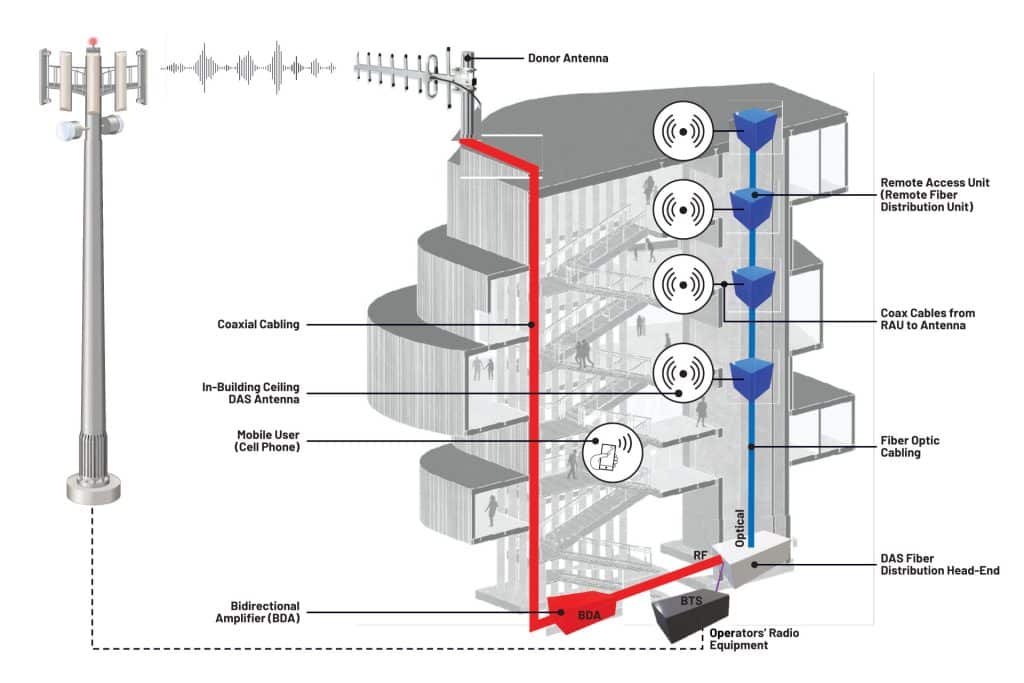
A BDA (Bi-Directional Amplifier) and DAS (Distributed Antenna System) work together to bring radio signals into buildings and distribute them throughout the space, ensuring consistent communication where it is typically unreliable.
The system begins by capturing signals from outside the building using a donor antenna. That signal is then amplified by the BDA to strengthen it before being distributed through a network of indoor antennas placed strategically throughout the facility. This allows the signal to reach areas that are normally difficult to cover, such as stairwells, basements, parking garages, and interior rooms.
By extending and balancing signal coverage across the entire building, a BDA/DAS solution helps eliminate dead zones and weak spots. The result is clear, dependable two-way radio communication for both day-to-day operations and critical emergency response, ensuring that teams can stay connected no matter where they are inside the building.
Does Your Building Has Coverage Gaps?
Contact AVC to perform a coverage test and identify weak signal areas to determine if a BDA or DAS solution is needed for your facility.
From Testing To Full Deployment
Every building presents unique challenges when it comes to in-building radio coverage. Factors like construction materials, layout, building size, and surrounding environment all impact how signals travel and where coverage gaps occur. That is why AVC follows a structured, step-by-step approach to designing and implementing BDA/DAS systems.
From initial testing to final deployment, each phase is carefully planned to ensure the system is tailored to your specific facility. By identifying problem areas early and designing around your building’s unique characteristics, AVC delivers solutions that provide consistent, reliable coverage where it is needed most. This approach helps ensure long-term performance, code compliance, and dependable communication for both daily operations and emergency response.
Step 1: Coverage Test
Evaluate your current signal strength and identify coverage gaps.
Step 2: System Design
Create a customized solution based on your building layout and requirements.
Step 3: Installation
Help meet local and national in-building communication regulations.
Step 4: Certification
Verify performance and ensure compliance with applicable standards.
Step 1: Coverage Test
Evaluate your current signal strength and identify coverage gaps.
Step 2: System Design
Create a customized solution based on your building layout and requirements.
Step 3: Installation
Help meet local and national in-building communication regulations.
Step 4: Certification
Verify performance and ensure compliance with applicable standards.
Built With Proven Technology
AVC provides complete in-building coverage solutions using reliable, industry-proven components designed for long-term performance.
BDA Amplifiers
Boost signal strength to overcome building interference
Distributed Antenna System (DAS)
Distribute signal evenly throughout the building
Donor Antennas
Capture signal from outside the building
Cabling And Infrastructure
Connect and support the entire system
BDA Amplifiers
Boost signal strength to overcome building interference
Distributed Antenna System (DAS)
Distribute signal evenly throughout the building
Donor Antennas
Capture signal from outside the building
Cabling And Infrastructure
Connect and support the entire system
Need Reliable Coverage Inside Your Building?
AVC can assess your current coverage and design a solution that ensures your team stays connected throughout your facility.
Meeting Public Safety Communication Standards
In many jurisdictions, buildings are required to support reliable radio communication for first responders. These requirements are put in place to ensure that emergency personnel can communicate clearly inside a structure, regardless of building size, layout, or construction materials. AVC helps building owners, developers, and facility managers navigate these requirements by designing BDA and DAS systems that align with local codes and national standards. From initial consultation through final testing, our team works to ensure your system meets performance expectations and passes inspection.
Requirements often include specific signal strength levels, coverage percentages throughout the building, and testing in critical areas such as stairwells, fire command rooms, and underground spaces. Ongoing monitoring and periodic testing may also be required to maintain compliance over time.By implementing a properly designed in-building communication system, you not only meet regulatory requirements but also support safer conditions for occupants and first responders. AVC helps ensure your system is built correctly, tested thoroughly, and ready when it is needed most.
Compliance Checklist:
- Minimum signal strength throughout the building
- Coverage in stairwells and critical areas
- System testing and certification
- Ongoing inspection and maintenance
Designed For A Wide Range Of Facilities
BDA and DAS systems are critical for buildings where communication reliability is essential. In many facilities, standard radio signals struggle to penetrate dense construction materials or reach interior and underground areas, creating gaps that can impact both daily operations and emergency response.
By extending and strengthening signal coverage throughout the building, BDA and DAS systems help ensure consistent, dependable communication across all areas. This is especially important in environments where teams need to stay connected at all times, whether coordinating routine tasks or responding to urgent situations. From large commercial buildings and healthcare facilities to schools, warehouses, and high-rise structures, these systems support safer, more efficient operations by eliminating dead zones and maintaining clear two-way communication wherever it is needed.
Experienced In Designing In-Building Coverage Solutions
AVC works with organizations across Arkansas to design and deploy BDA/DAS systems that meet real world needs. From initial testing to final certification, our team ensures your system is built to perform reliably.
We focus on delivering solutions that are tailored to your building, compliant with requirements, and supported long after installation.